Swarm
Of Bees
Firstly, don’t panic! Swarming is the honeybee’s natural means of
reproduction — here’s everything you need to know.
Don’t Panic!
At first sight, a swarm of bees can be terrifying, especially in your garden or near your house.
But there is no need to worry. Swarming is the honeybee’s natural means of reproduction. One colony will split into two, three, or sometimes more.
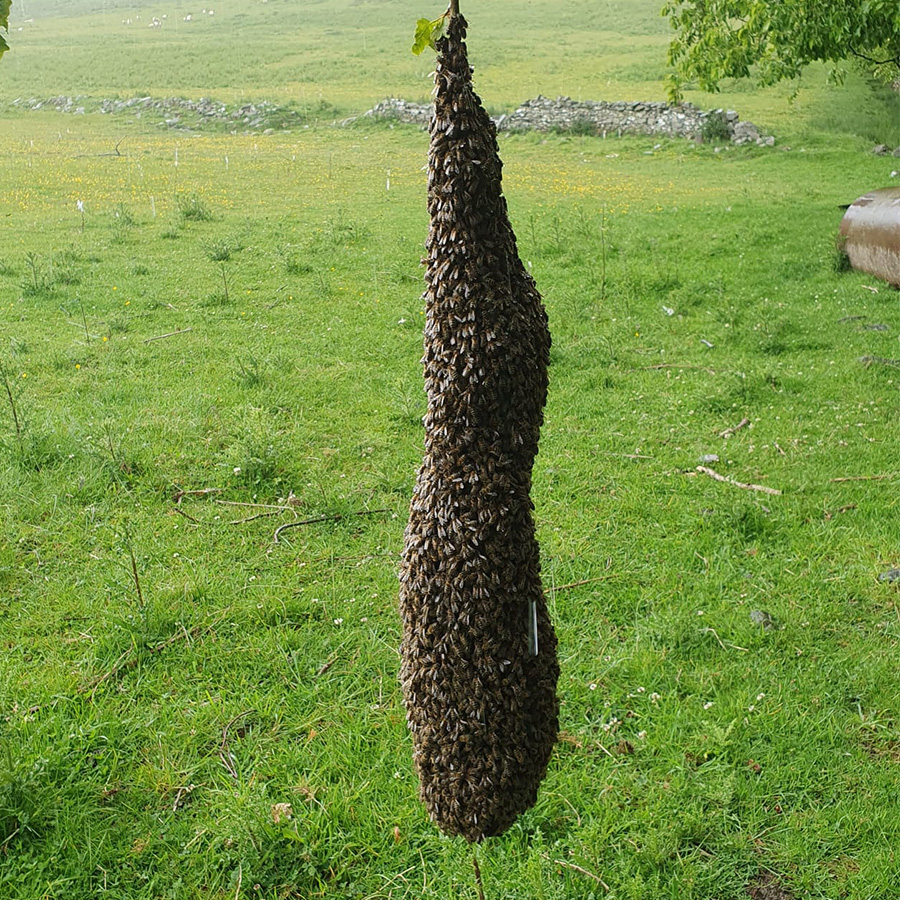
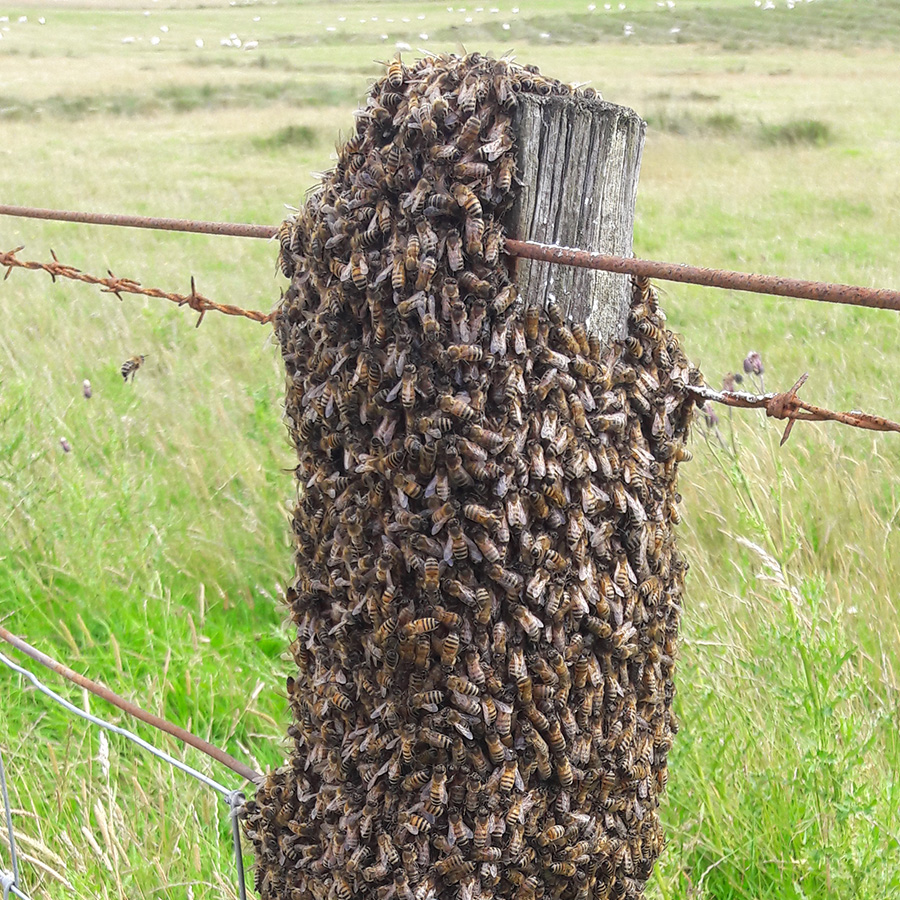
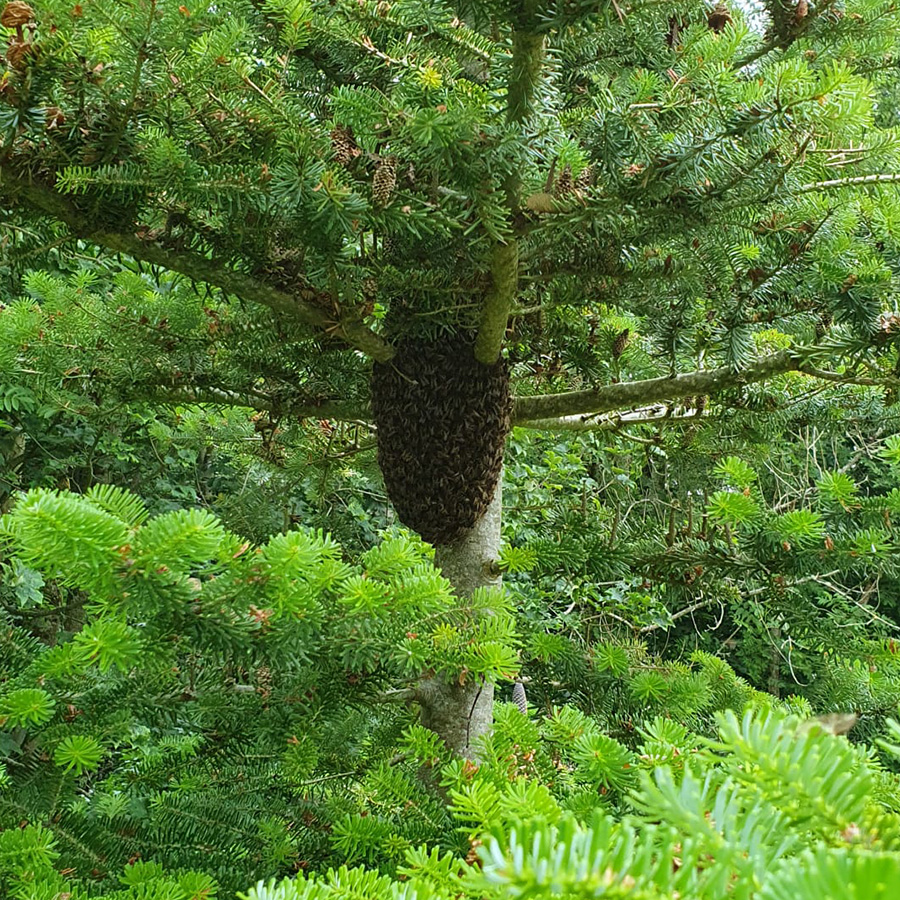
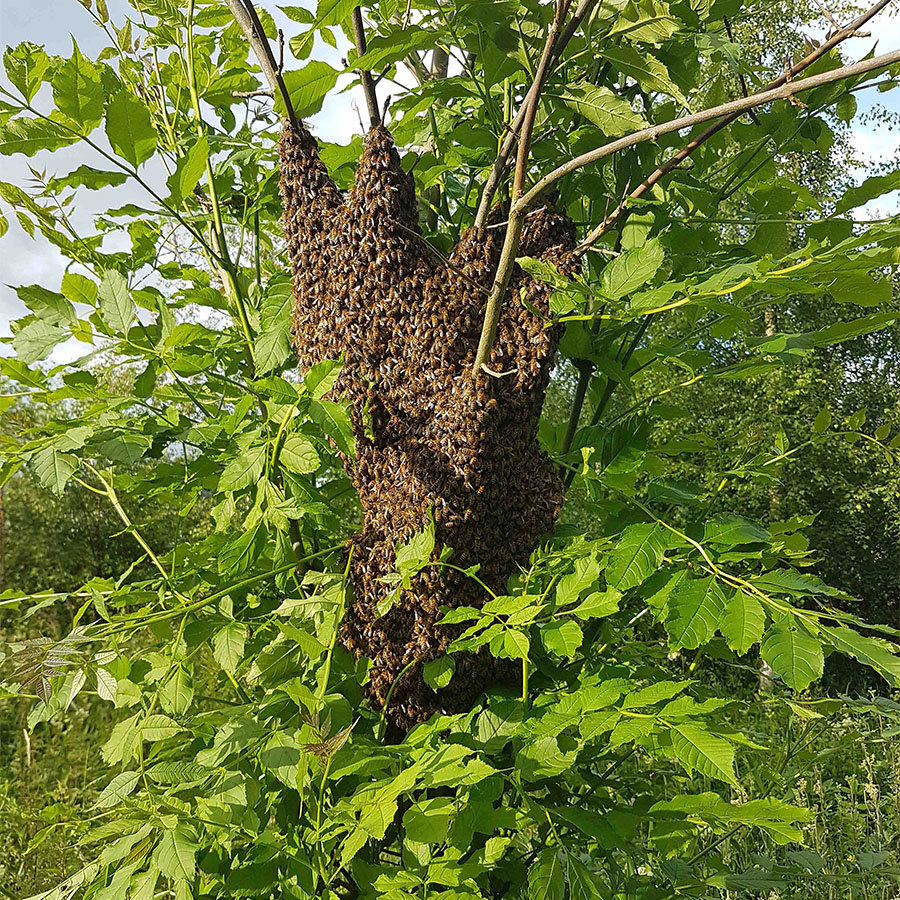
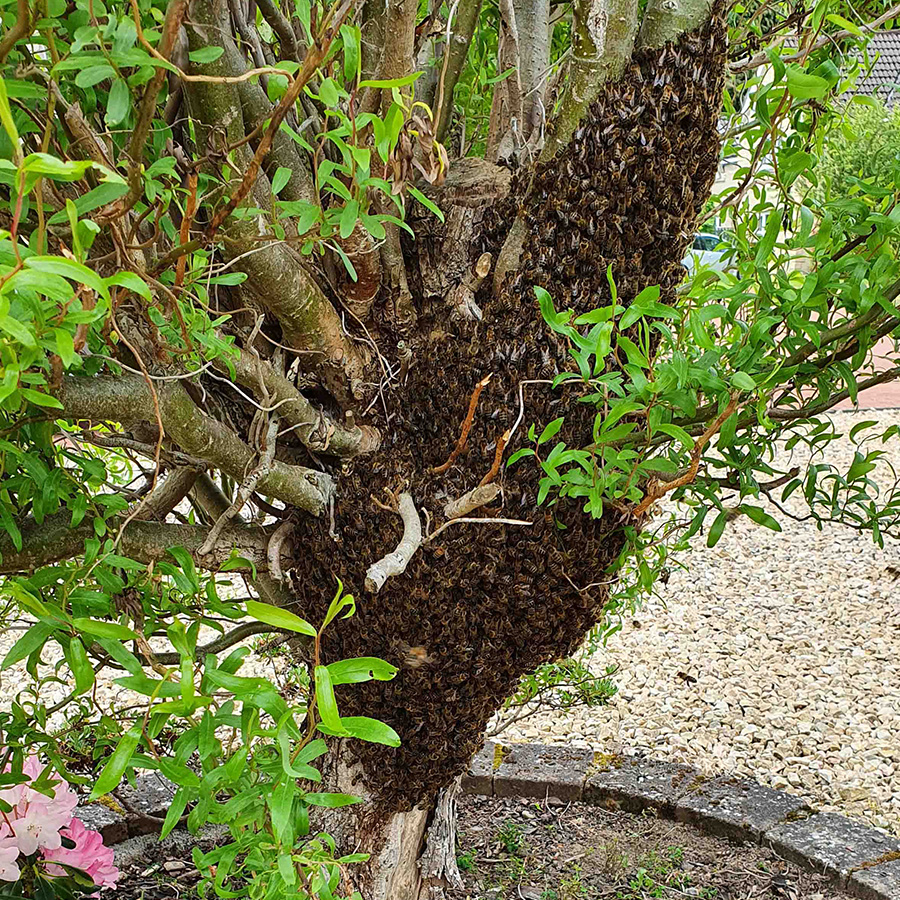
Each swarm that emerges will usually form a cluster in a tree or a shrub. This is a transitional stage that may last from a few minutes to hours, or even to the next day, where the bees can regroup prior to moving off to a new home.
We’re Here To Help
We will do our best to help out when someone is troubled by a swarm of honeybees — but please note we are unable to remove established colonies from walls, chimneys, roofs or other structures, at heights or in inaccessible locations that pose a safety risk to our members.
Are They Honey Bees?
Please check that what you have is a swarm of honey bees. In the UK there are over 250 species of bees but only one European honey bee (Apis mellifera), so it is easy to come across other types of bee.
Please take a look at the link below to help identify the bees and for further advice before contacting us.
What To Do Next
If the swarm is in your garden and you can safely approach it, follow these simple steps.
1
Take Photos
If you can safely do so, take a few pictures to show the swarm’s size and location. This will help our Secretary assess whether we can assist.
2
Email Us
Send your photos — along with your name and a contact number — to our Secretary at
secretary@peeblesbeekeepers.org.uk
3
We’ll Respond
If our Secretary thinks we can help, she will contact you and arrange for a beekeeper to visit as soon as possible.
So You Have A Swarm What Now?
If the swarm is hanging in a cluster in the garden, a beekeeper can remove them without a great deal of difficulty. However, if they are high up off the ground or have entered a building, it is then usually beyond the scope of most beekeepers.
Email our Secretary with a few photos, your name and a contact number:
secretary@peeblesbeekeepers.org.uk
The collected swarm will be taken to an apiary and monitored for its health, treated for varroa (a mite that most honey bee colonies suffer from) and then, all being well, it will be placed in a hive.
A Small Donation Is Appreciated
As we are all volunteers, we would appreciate a small donation of around £30 to the Association for this service, to cover the costs involved. This may be made by BACS — see the link below for payment details.
Swarm Gallery
Real swarms collected by Peeblesshire Beekeepers Association members.